Choose App To Run On Startup Mac
You likely have a number of apps that startup when you login to your Mac. Setting those up goes something like this: Right-click the icon when it’s in the macOS dock and click “Open at Login.”
But now, you have all of these apps opening willy-nilly all over your Desktop. There’s a cleaner way to handle the apps that will be opening automatically at login.
How To Automatically Minimize Apps That Startup at Login on macOS
1.) Click on the Apple logo () in the upper left-hand corner of your Mac’s Desktop. (As seen below.)
2.) Click “System Preferences…” in the menu that appears. (As seen above.)
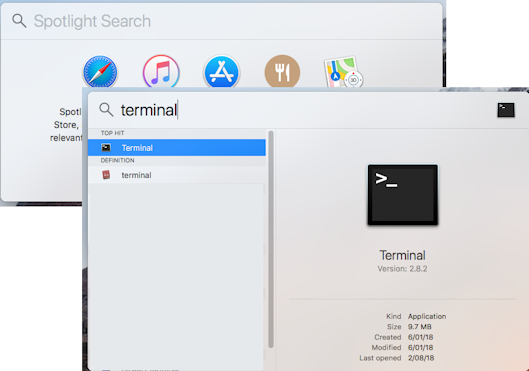
- If you’d like to stop an app from automatically starting, follow steps 1-3, and highlight the app that you wish to remove and click the ‘-‘ sign to remove the app. If you’d like an app to startup in hidden mode, then check the Hide box next to the name of the app under the Login Items tab.
- Oct 24, 2017 Here’s how to set an app to open automatically. Select the Apple menu and System Preferences. Select Users & Groups and then the Login Items tab in the top center. Select the ‘+’ icon under the center pane. Select an app from the list that appears and then select Add. Now, when you reboot or first start your Mac, the app will start.
3.) When System Preferences opens, click the “Users & Groups” icon. (As seen below.)
4.) Select your user profile, and then tick the “hide” box next to all the applications that you would like to be minimized when macOS starts up. (As seen below.)
How to turn website into app chrome mac. How to Stop an Application from Opening at Startup With Mac OS X. This wikiHow teaches you how to prevent a startup application from running on your Mac. Open the Apple Menu. Click the black Apple icon in the upper-left corner of the.
Now, when macOS starts up, those apps will run, but they’ll minimized themselves to the dock upon launch. Now, when the apps open automatically at login, things will look much neater, and you won’t have to minimize a metric buttload of apps before you get down to work.
For more tips and tricks on how to make better use of your Mac, iOS device, Apple Watch, or Apple TV, be sure to visit the “How To” section of our website.
Native Mac apps built with Mac Catalyst can share code with your iPad apps, and you can add more features just for Mac. In macOS Big Sur, you can create even more powerful versions of your apps and take advantage of every pixel on the screen by running them at native Mac resolution. Apps built with Mac Catalyst can now be fully controlled using just the keyboard, access more iOS frameworks, and take advantage of the all-new look of macOS Big Sur. There’s never been a better time to turn your iPad app into a powerful Mac app.
Designed for macOS Big Sur.
When an app built with Mac Catalyst runs on macOS Big Sur, it automatically adopts the new design. The new Maps and Messages apps were built with the latest version of Mac Catalyst.
Get a head start on your native Mac app.
Your iPad app can be made into an excellent Mac app. Now’s the perfect time to bring your app to life on Mac. The latest version of Xcode 12 is all you need. Begin by selecting the “Mac” checkbox in the project settings of your existing iPad app to create a native Mac app that you can enhance further. Your Mac and iPad apps share the same project and source code, making it easy to make changes in one place.
Optimize your interface for Mac.
Choose App To Run On Startup Mac Pro
Your newly created Mac app runs natively, utilizing the same frameworks, resources, and runtime environment as apps built just for Mac. Fundamental Mac desktop and windowing features are added, and touch controls are adapted to the keyboard and mouse. By default, your app will scale to match the iPad’s resolution. On macOS Big Sur, you can choose “Optimize interface for Mac” to use the Mac idiom, running your app using the native resolution on Mac. This gives you full control of every pixel on the screen and allows your app to adopt more controls specific to Mac, such as pull-down menus and checkboxes.
Choose App To Run On Startup Mac Pro
Even more powerful.
The new APIs and behaviors in macOS Big Sur let you create even more powerful Mac apps. Apps can now be fully controlled using just the keyboard. You can create out-of-window and detachable popovers, control window tabbing using new window APIs, and make it easier for users to select photos in your app by using the updated Photos picker. iOS Photos editing extensions can now be built to run on Mac. And your app is even easier to manage when it’s running in the background with improved app lifecycle APIs.
New and updated frameworks.
Mac Catalyst adds support for new and updated frameworks to extend what your apps can do on Mac. HomeKit support means home automation apps can run alongside the Home app on Mac. The addition of the ClassKit framework lets Mac apps track assignments and share progress with teachers and students. Plus, there are updates to many existing frameworks, including Accounts, Contacts, Core Audio, GameKit, MediaPlayer, PassKit, and StoreKit.
Tools and resources.
Download Xcode 12 and use these resources to build native Mac apps with Mac Catalyst.